Below is a refined, cohesive version of your text describing the “Borg Queen and Stargate SG-1 Replicators Node Model” for the Monkey Head Project. It preserves the original structure and details while enhancing clarity and academic tone.
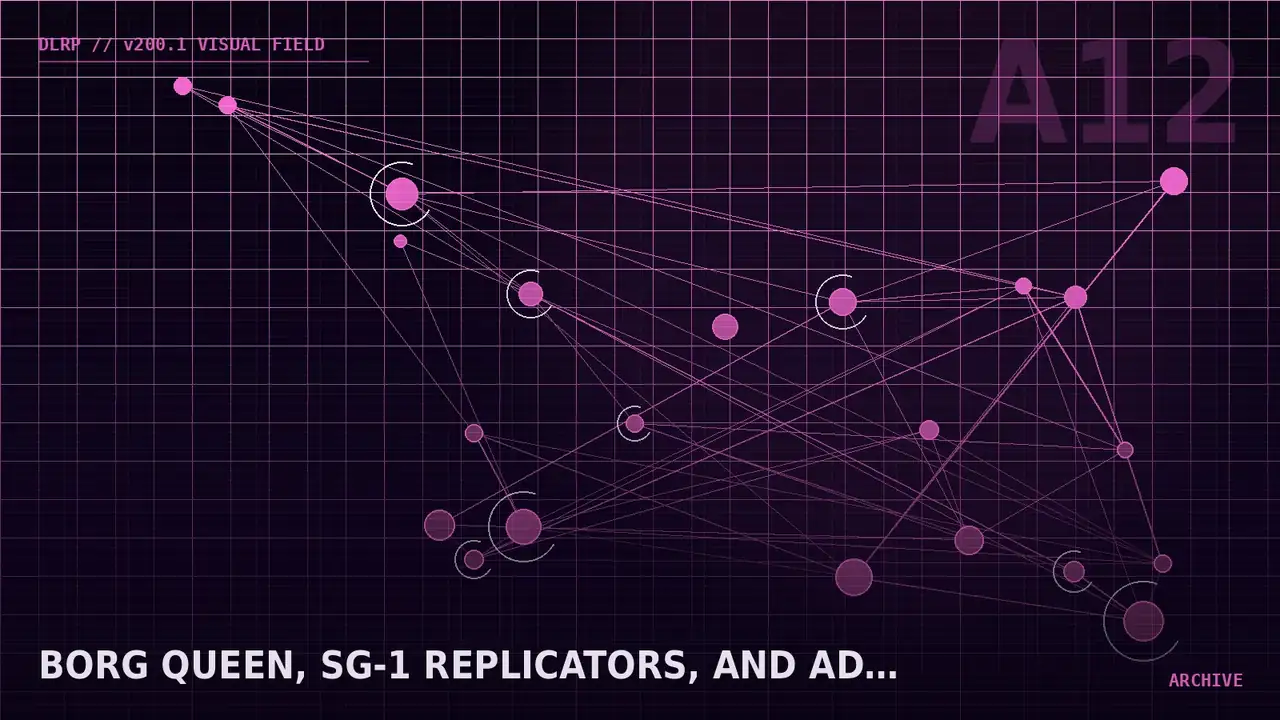
Borg Queen and Stargate SG-1 Replicators Node Model
The Monkey Head Project draws upon two iconic science fiction paradigms to inform its advanced computational and robotic framework: the Borg Queen from Star Trek: The Next Generation, exemplifying centralized control, and the Replicators from Stargate SG-1, illustrating decentralized, self-replicating systems. Combining these distinct approaches yields an architectural model capable of cohesion, adaptability, and resilience—qualities that drive the Project’s ambitious objectives.
Centralized Decision-Making and Collective Consciousness
In the Borg Collective, a Borg Queen wields overarching authority, directing actions for the collective’s benefit while maintaining intimate connections with each drone. Within the Monkey Head Project:
Central Command Node
- Operates as a top-level decision-making entity, coordinating global strategies, workload distribution, and conflict resolution.
- Sets overarching priorities and enforces coherence across all project nodes.
Unified Direction
- Ensures every node pursues common goals, preserving system cohesion and stability.
- Continuously monitors node status via predictive analytics, adjusting commands as needed to keep development aligned with project objectives.
Decentralized, Self-Replicating Systems
The Replicators represent a distributed, rapidly adapting network that functions without constant oversight—each unit can replicate itself to tackle new tasks or scale up resources. Translating these principles into the Monkey Head Project:
Independent Nodes
- Operate autonomously, dynamically assessing environment and workload demands.
- Perform real-time corrective measures, boosting system agility and responsiveness.
Self-Replication
- Allow nodes to clone or extend their functionalities under high demand or emergent tasks, paralleling Replicators’ swift expansion model.
- Strengthens overall resilience by preventing single bottlenecks.
Dynamic Adaptation
- Nodes autonomously redistribute resources or replicate in response to changing conditions.
- Minimizes workflow disruptions and addresses data processing spikes efficiently.
Integration and Implementation
By merging centralized Borg Queen-like leadership with autonomous Replicator-style nodes, the Monkey Head Project fosters an ecosystem balancing long-term strategic oversight and real-time, localized adaptation.
Implementation Steps:
Design Central Command Node
- Create a high-level coordination mechanism, integrating real-time data from all nodes, adjusting strategies as requirements evolve.
- Formalize protocols for system-wide goal setting and conflict resolution.
Establish Independent Nodes
- Develop self-sufficient modules capable of autonomous operation, replication, and resource scaling.
- Equip each node with the capacity to evaluate its health and resource demands independently.
Develop Communication Protocols
- Implement robust, low-latency channels alongside fallback networks for uninterrupted operation.
- Adopt mesh networking strategies ensuring open communication paths, even if some nodes fail.
Create Adaptation Algorithms
- Craft algorithms governing self-replication and dynamic adaptation, ensuring nodes can accurately decide when to clone functionalities or redistribute workloads.
- Regulate resource usage to avoid undue strain on the system.
Integrate Ethical Safeguards
- Incorporate access controls, periodic audits, and fail-safe mechanisms preventing unauthorized or unethical behaviors.
- Maintain alignment with broader project values and human oversight.
Ethical Considerations
Safeguards promoting transparency, accountability, and ethical compliance are vital in any system featuring autonomous expansion and decision-making:
Transparency
- Mandate open, detailed logging of node operations—particularly actions involving replication or autonomous adaptations—accessible for human review.
- Ensure real-time oversight where needed, fostering public trust and allowing for prompt interventions.
Accountability
- Employ logging mechanisms and reporting protocols tracing every decision back to its node of origin, upholding chain-of-responsibility principles.
- Guarantee that autonomy does not undermine the ultimate authority of the Project’s ethical and strategic guidelines.
Ethical Standards
- Adhere to recognized principles of safe and fair AI deployment, incorporating modules that evaluate potential actions against approved constraints.
- Minimize risk of harm or unintended consequences by restricting unauthorized modifications or replication events.
Conclusion
The Borg Queen and SG-1 Replicators Node Model provides a creative, efficient approach to orchestrating computational and robotic elements within the Monkey Head Project. Centralized command ensures cohesion and unified vision, while decentralized, self-replicating nodes enable adaptability and fast response to shifting demands. This dual framework merges long-term strategic planning with real-time reactivity, forming a formidable, agile architecture. Supported by stringent ethical and human oversight measures, this design stands poised to tackle complex tasks, optimize resource distribution, and respond dynamically to emerging challenges—safeguarding the Project’s ethical foundation and sustaining its innovative edge.
#Monkey-Head-Project
(Written or edited by an A.I., pending Human-Counterpart approval.)