A Mozart-derived shell is physically present.
Huey · route H01
Huey
Huey as one embodied AI node: current physical reality, V4 cohesion, node-local compute, evidence, and open acceptance work.
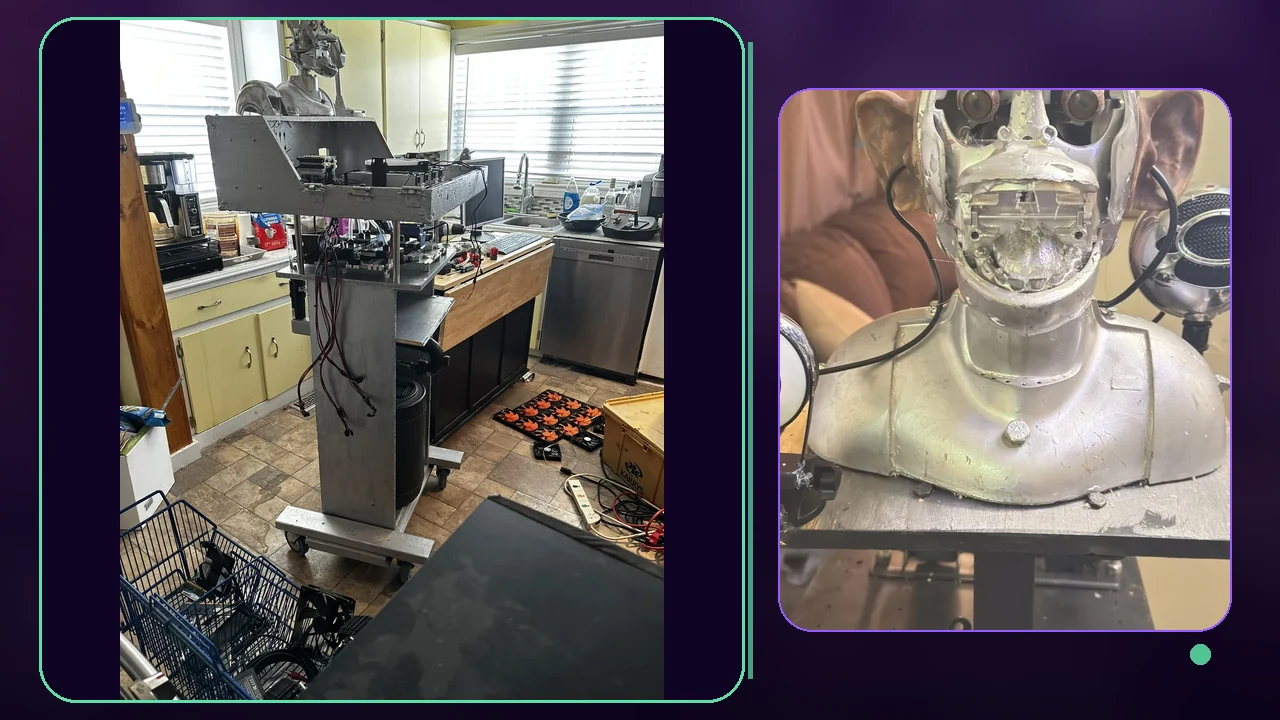
PRIMARY ARCHITECTURAL UNIT
Huey is one embodied AI node.
A node is the physical embodiment of one AI unit: one coherent machine in which local compute, HueyOS runtime functions, operator interaction, structured evidence, recovery, and robotic embodiment can be integrated and evaluated together.
Validity ruleOne Huey node must stand independently before Farm, bifurcation, multi-node coordination, or collective governance is treated as required.
CURRENT REALITY
The physical record comes first.
The website distinguishes what is present from what is intended.
The animatronic monkey head is attached and remains the identity anchor.
The hand is physically present; its final functional role remains open.
A fold-out surface exists and requires mechanical and ergonomic refinement.
The current i9/TUF/Optane computer exists outside the shell.
ACCEPTED DIRECTION
Huey V4 turns lineage into one object.
V3 is the base. V2 is the donor. The current i9/TUF/Optane system is the intended local compute kernel after validation.
Physical and visual body identity.
Salvageable structures and components after inventory.
Transfer only after power, cooling, mounting, storage, service, and rollback checks.
One coherent, maintainable, evidence-producing physical node.
INTERNAL NODE DOMAINS
Brain and Body remain useful—inside the node.
Brain functions
Cognition, orchestration, memory access, evidence, recovery, and operator-facing runtime functions.
Body functions
Embodiment, sensing, interaction, actuation, power, cooling, safety, and serviceability.
Local compute kernel
CPU, storage, accelerators, I/O, drivers, and supporting runtime inside one machine boundary.
PyHuey
Primary GUI and core runtime direction. It is the interface of the node, not the embodiment or collective.
Evidence and recovery
Structured logs, checksums, diagnostics, failure records, and a recovery-capable CLI path.
COMPUTE POSTURE
CPU first for support; unified GPU inference as the target.
CPU duties
- transcription
- orchestration
- logging and evidence
- I/O and system support
- general services and recovery
Four accelerators
The strongest present candidate is 3 × Tesla V100 32 GB plus the existing 8 GB utility GPU.
No purchase, installation, fit, power, cooling, lane topology, memory unification, parallelism, or performance is claimed.
96 GB across three major GPUs would be aggregate memory, not transparent unified VRAM.
The utility GPU remains separate unless evidence supports another role.
The inference framework and sharding method remain unresolved.
MERGED IMPLEMENTATION
Repository evidence remains useful, but it no longer defines the whole ontology.
Known MP3 preparation, transcription/cognition hooks, JSON/JSONL evidence, and mock-safe orchestration exist in the pinned repository.
Fixed commands, path containment, timeout handling, and structured results are implemented.
Append-only evidence and inspection paths exist while remaining explicitly non-authoritative.
The package is named hueyos; current imports and entry points remain under huey.
UNRESOLVED
V1 remains open.
A future declaration must name the recurring useful function, user and context, minimum node-local capability, reliability threshold, evidence, and external-service dependencies.
The known MP3 → local transcription → cognition response → structured-log workflow remains an active foundation proof. It is not automatically the whole of V1, and V1 does not automatically require an operational Farm or collective.
TARGET STATE
Beyond one node belongs to Monkey-Head-Project.
Additional nodes, optional shared Farm resources, exact and augmented bifurcation, and legitimate collective coordination sit above single-node validity.
Open the umbrella and collective modelVISUAL EVIDENCE
One physical object, shown deliberately.
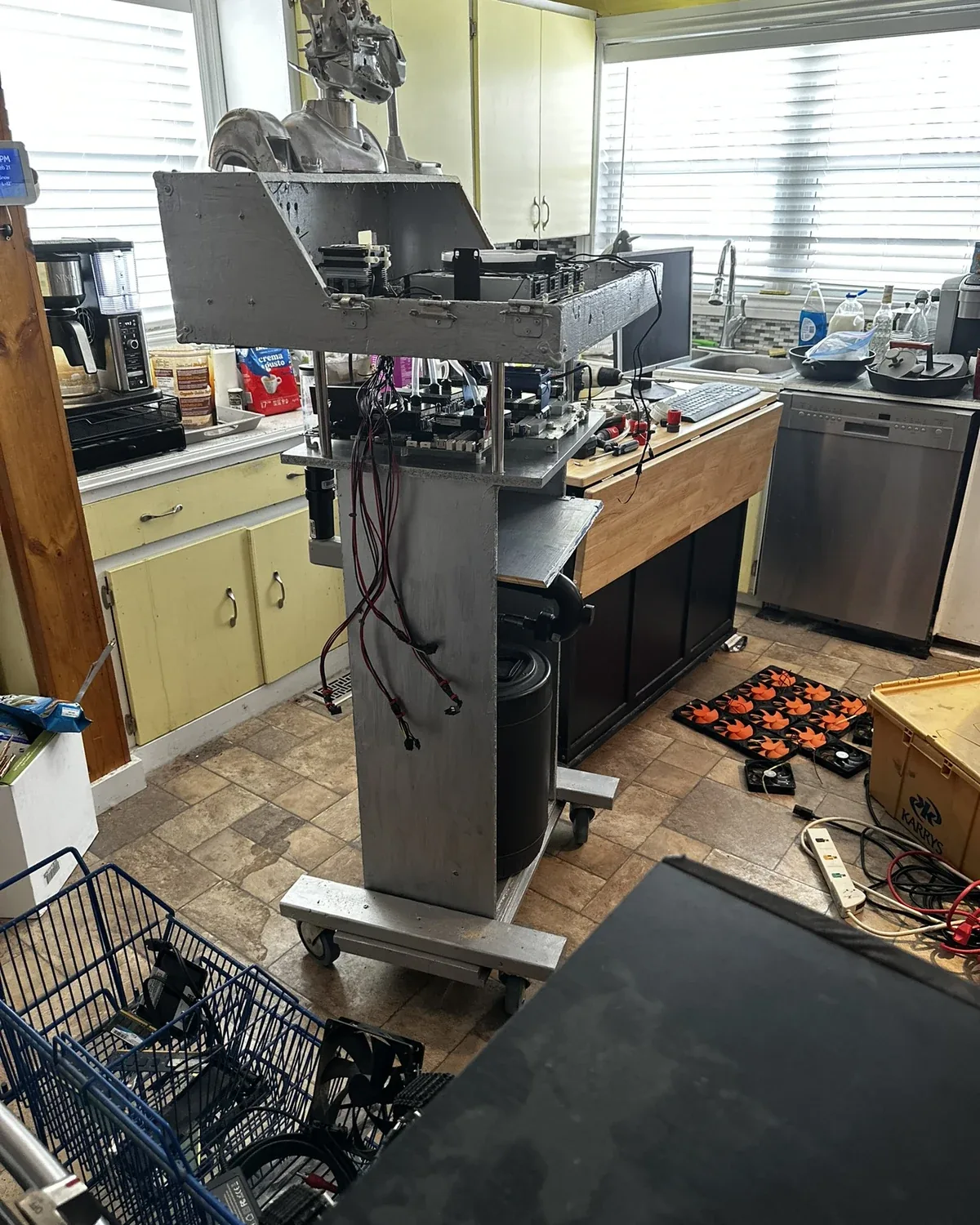
The complete object is shown before subsystem close-ups.
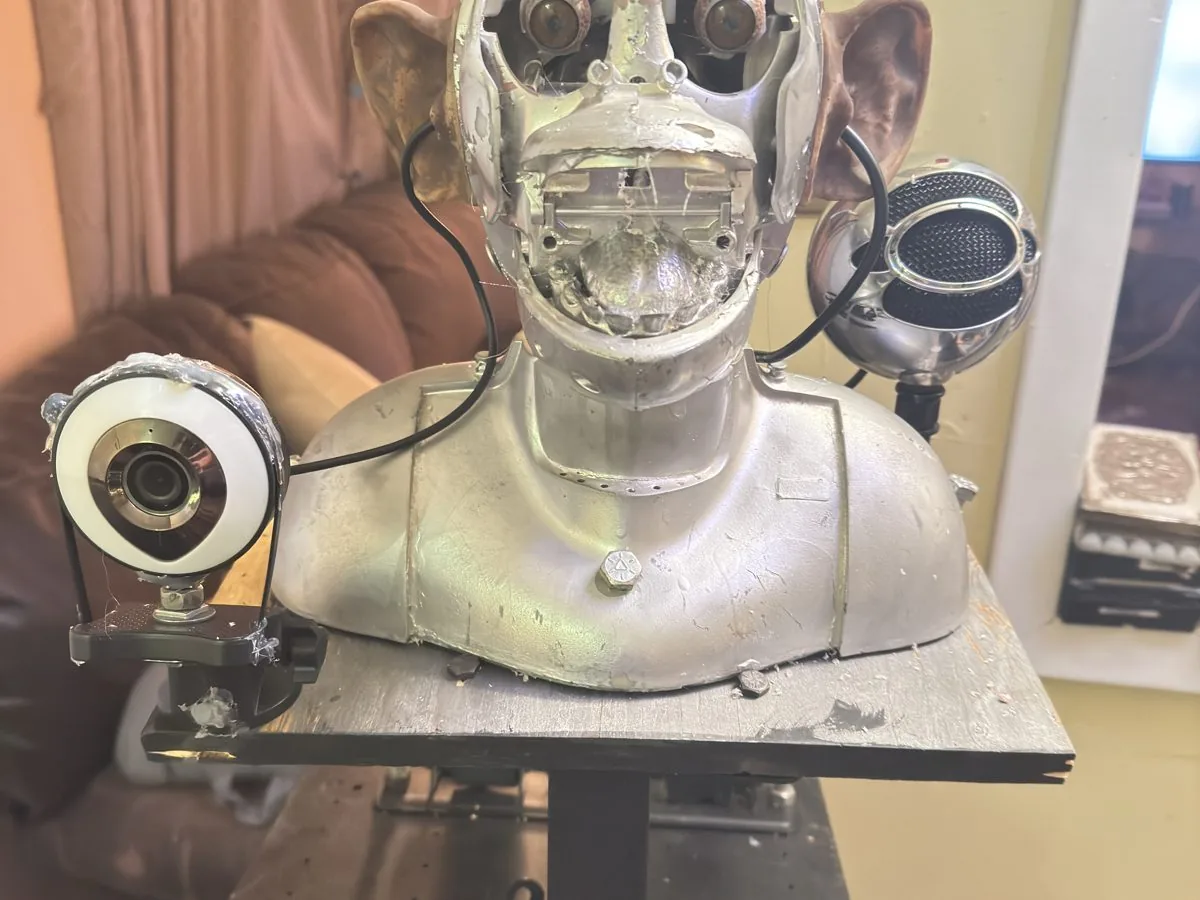
Cohesion includes serviceability.
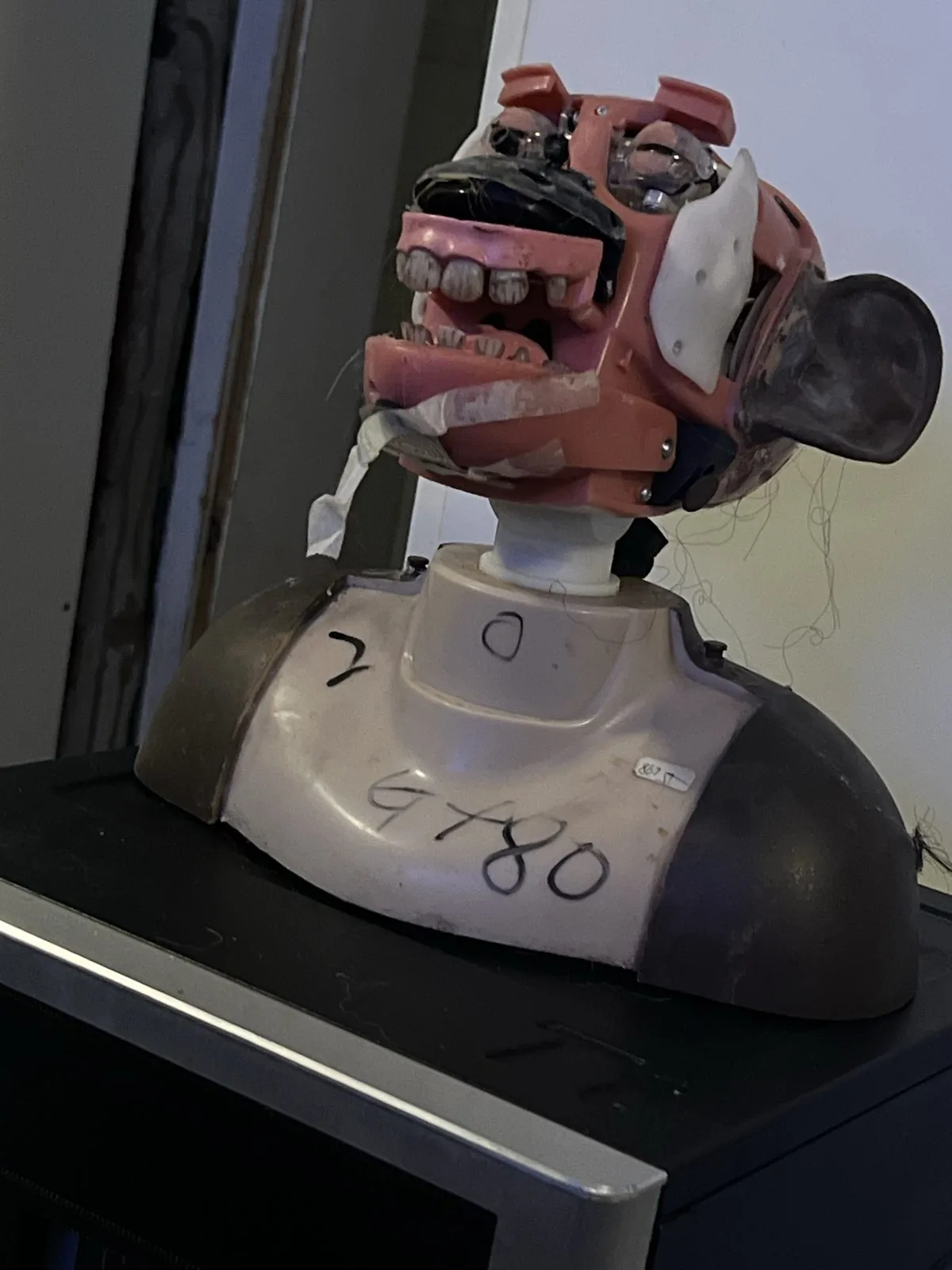
Preserved without pretending every part is current.